Miranda Butler
Hallowe'en PartyMiranda Butler, the twelve-year-old daughter of Judith Butler, is both a child excluded from the Hallowe’en party and a figure whose knowledge reaches into the story’s most troubling secrets. Confined at home with a sore throat and a temperature, she misses the gathering where Joyce Reynolds is murdered. Yet Miranda’s friendship with Joyce, her understanding of the history of the place, and her claim to have seen a murder make her absence consequential: she is not present at the party, but her words help explain why its past crimes may have had a witness.
Identity and First Appearance
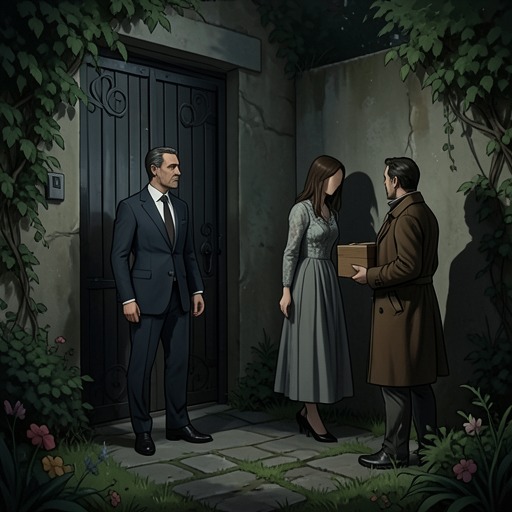
When Hercule Poirot encounters Miranda in the sunk garden, she is waiting on a fallen tree at the entrance to a path. She identifies him before he introduces himself, and the narration presents her as fragile, with an almost bell-like voice. Her appearance seems to belong to the garden itself: Poirot thinks of a dryad or an elf-like being. This impression makes her seem at once physically delicate and strangely at home in a landscape that adults approach through investigation and unease.
Miranda says she is twelve, has lived in the area for a long time, and knows everybody. She recognizes that Poirot has been speaking with Michael Garfield. Her easy familiarity with local people and places contrasts with her youth, while her frank uncertainty about going to boarding school the following year marks an approaching change in her life. She does not know whether she will be sorry or glad until she gets there. She also says that she does not like the place as much as she once did, a change that gives her attachment to home a shadowed quality without explaining it away.
Joyce Reynolds and the Party
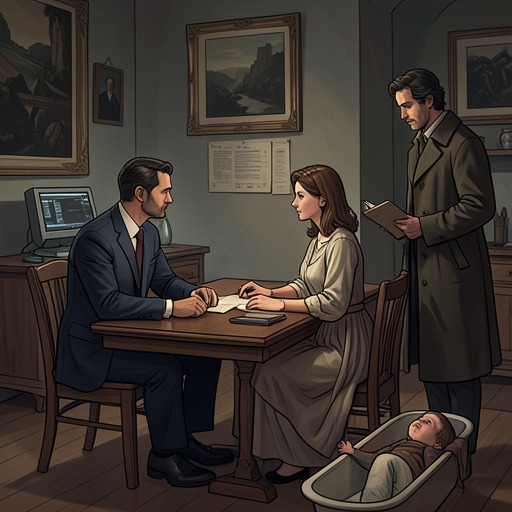
Miranda’s illness keeps her from the party, to her disappointment. Judith Butler regrets that her daughter cannot attend, and later Miranda tells Poirot that her mother had refused to take her because she had a sore throat and a temperature. The restriction is a simple act of parental care, but it has an unintended consequence: Miranda cannot have witnessed Joyce’s death at the party, even though her knowledge becomes important to the inquiry.
Joyce had been a great friend to Miranda, though Miranda qualifies the friendship as being so in a particular way. Joyce told her interesting things about elephants and rajahs and about having once visited India. The girls shared secrets, and Miranda compares her own store of confidences with her mother’s wider experience, including Judith’s travels in Greece and her meeting there with Ariadne Oliver. Miranda’s memories establish Joyce not merely as a victim in an investigation but as the older friend who fed a child’s curiosity with stories and confidences.
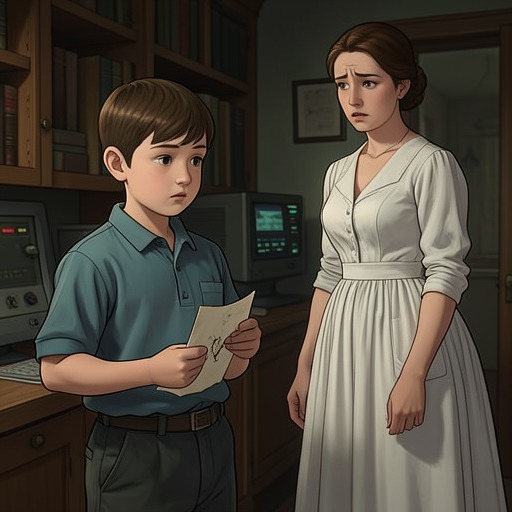
When Miranda tells Poirot that Joyce was drowned, she says Judith had not wanted to tell her, but that concealment seemed foolish because Miranda was twelve. The remark reveals a child who expects to be trusted with frightening facts and who reasons about them rather than simply receiving them. She connects Joyce’s drowning with an old saying about being born to be hanged or drowned, and with the earlier killing associated with the site before it became a garden. The story does not present her as an investigator with a complete account; instead, she combines what she has heard, what she remembers, and what she suspects.
Knowledge of the Past
Miranda says that people may be afraid because someone was killed there long ago, when the area was still a quarry and then a gravel or sand pile. She remembers that a woman was found there and raises the saying about a person being born to die by hanging or drowning. When Poirot asks whether she knows what happened at the party, she insists that she was not there, then reasons that she might nevertheless know because Joyce was drowned. Her movement from an old local death to Joyce’s recent murder shows how the setting links separate acts of violence in her mind.
Her knowledge is incomplete and distinctly personal. She refers to adults around her as not especially clever, but she does not claim to possess a full explanation. Instead, she asks Poirot to accompany her and leads him through a hedge from the Quarry Garden. The route is much easier for her slight build; as they pass, she warns Poirot about thorn bushes and holds back prickly branches for him. She guides him past a compost heap and a derelict cucumber frame, then through a small rose garden to the bungalow, entering through an open French window. These concrete acts make her an active guide rather than simply a child questioned by adults: she knows the informal paths and takes responsibility for bringing Poirot where she wants him to go.
The Witness and the Mystery’s Resolution
The final explanation gives Miranda’s earlier statements a darker significance. Poirot explains that Rowena Drake killed Joyce and needed an innocent explanation for being wet: holding a struggling child under water would inevitably splash the murderer. Rowena staged the fall of a water-filled vase on the staircase, letting it soak her while Elizabeth Whittaker was present to see the apparent accident. Whittaker’s account of Rowena’s startled movement and the broken vase thus becomes part of the concealment rather than a straightforward report of an accident.
Poirot also explains that Rowena had suspected someone might have been in Quarry Wood when she and Michael Garfield killed Olga Seminoff. Joyce had not actually seen a murder, despite what Rowena feared. Poirot says Miranda had told Joyce that she herself had once seen a murder committed. This disclosure makes Miranda’s friendship with Joyce the route by which a buried event entered the present investigation: what Rowena feared Joyce knew was, in fact, a claim Miranda had made. The evidence links Miranda to the role of a possible witness, though it does not provide a fuller account here of what she saw or when she saw it.
Miranda’s narrative importance rests on the distance between her child’s position and the adult crimes around her. She misses Joyce’s murder because she is ill, yet understands that Joyce was drowned; she speaks of an older killing before Poirot lays out its connection to Rowena and Michael; and her words to Joyce help explain Rowena’s suspicion. Her delicacy and youthful manner do not make her knowledge trivial. In a story where concealment, mistaken assumptions, and belated recognition shape the investigation, Miranda’s apparently fragmentary observations preserve a crucial link between the crimes and the person who may have witnessed one of them.